Key takeaways
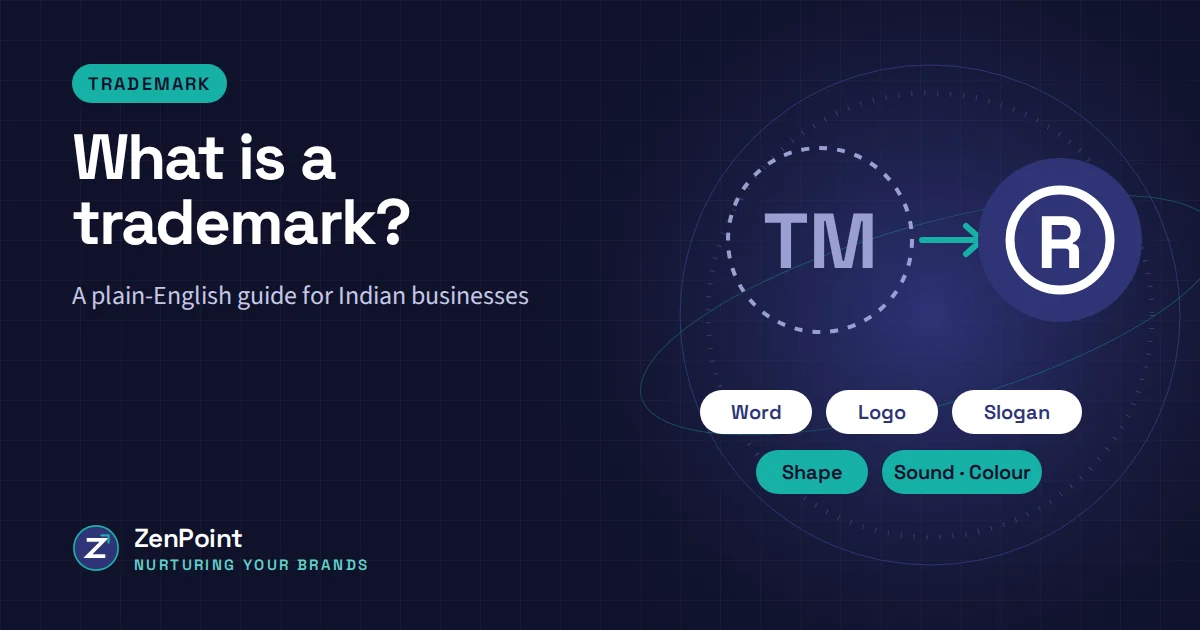
- A trademark is any sign that tells customers your goods or services come from you — a name, logo, slogan, shape, colour combination or even a sound.
- In India, trademarks are governed by the Trade Marks Act, 1999. Registration is not compulsory, but it gives you far stronger, easier-to-enforce rights.
- You can use ™ from the day you file; ® only once the mark is registered. Using ® on an unregistered mark is an offence.
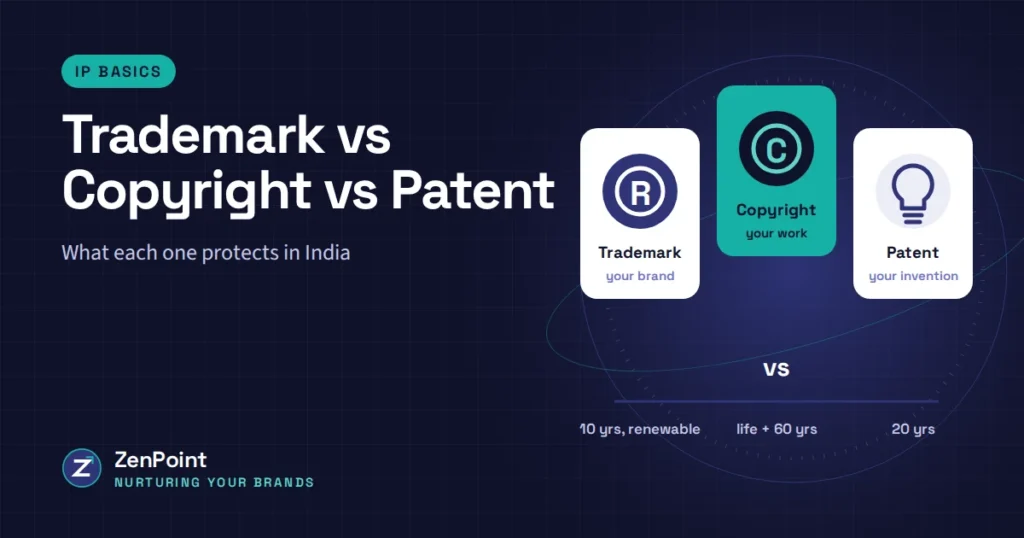
- A registration lasts ten years from the filing date and can be renewed indefinitely.
- The strongest marks are invented or unrelated to what you sell. Descriptive words are the hardest to register and protect.
Every business has a name. Far fewer have a trademark in the legal sense — a brand that the law recognises as theirs and that they can stop others from copying. The difference usually becomes clear at the worst moment: when a competitor launches under a confusingly similar name, when a marketplace refuses to list your products, or when an investor asks who actually owns the brand.
This guide explains, in plain English, what a trademark is under Indian law, what can be protected, what registration adds, and how to choose a mark that will be easy to protect.
What is a trademark?
A trademark is a sign that distinguishes the goods or services of one business from those of others. Its legal job is to tell a customer who a product comes from. When you see a familiar logo on a packet in a shop, you know — without reading anything else — who made it and what quality to expect. That recognition is what trademark law protects.
In India, trademarks are governed by the Trade Marks Act, 1999 and the Trade Marks Rules, 2017. The Act defines a trademark as a mark that can be represented graphically and is capable of distinguishing one person’s goods or services from another’s. It also defines “mark” widely, to include a device, brand, heading, label, ticket, name, signature, word, letter, numeral, the shape of goods, packaging, and a combination of colours.
What can be registered as a trademark in India?
Most businesses think only of their name and logo, but the law covers much more:
- Word marks — the brand name itself, in plain text. This is usually the most valuable registration, because it protects the name however it is styled.
- Device marks (logos) — a logo, emblem or stylised word.
- Slogans and taglines — provided they are distinctive and not merely a description or a common phrase.
- Shape marks — the distinctive shape of a product or its packaging.
- Colour combinations — where the colours themselves identify the source of the goods.
- Sound marks — a distinctive jingle or sound. The Trade Marks Rules, 2017 allow sound marks to be filed as an audio file with a graphical representation.
- Collective and certification marks — marks used by members of an association, or to certify the origin, quality or other characteristics of goods.
Registered and unregistered trademarks
Registration is not compulsory in India. An unregistered mark that has been used and has built up a reputation can still be protected through an action for passing off — a claim that someone is misrepresenting their goods as yours. The law also protects prior users: if you have been using a mark continuously from before another person’s use or registration, your right to keep using it is preserved.
But relying on an unregistered mark is hard work. In a passing-off action you must prove your reputation, the misrepresentation and the damage — usually with years of sales figures, advertising and evidence of confusion. A registered owner starts from a much stronger position: the registration itself is evidence of ownership, and the owner can sue for infringement without first proving reputation.
What registration actually gives you
- The exclusive right to use the mark for the goods or services it is registered for, anywhere in India.
- The right to sue for infringement — to stop others using an identical or deceptively similar mark, and to claim damages or profits.
- Priority from the filing date — once granted, the registration takes effect from the date of application, so the earlier you file, the stronger your position.
- A business asset — a registered mark can be sold, assigned, licensed or franchised, and it is often scrutinised in funding and acquisition due diligence.
- Marketplace and platform protection — many e-commerce brand-protection programmes require a registered or applied-for trademark before they will act on counterfeit listings.
Our trademark registration service explains how a filing is prepared and what it includes.
™ and ® — which symbol can you use?
The ™ symbol simply tells the public that you claim the sign as your trademark. You can use it on any mark, including one that is not yet registered — most businesses start using it from the day they file.
The ® symbol means the mark is registered. You may use it only after registration, and only for the goods or services covered. Falsely representing a mark as registered is an offence under the Trade Marks Act, so using ® before registration is a real legal risk, not just a formality.
How long does a trademark last?
A registration is valid for ten years from the date of application and can be renewed for further ten-year periods without limit. A well-maintained trademark can therefore last as long as the business uses it. If the renewal deadline is missed, the mark can be removed from the register — though it may, within limits, be restored. We cover the details in our trademark renewal guide.
What makes a strong trademark?
The law protects marks that are distinctive. Examiners and courts think of marks on a spectrum, from strongest to weakest:
- Invented words — made-up words with no meaning. The strongest and easiest to register.
- Arbitrary marks — real words with no connection to the product, like a fruit name used for electronics.
- Suggestive marks — words that hint at a quality without describing it. Usually registrable.
- Descriptive marks — words that directly describe the product, its quality or its purpose. These face objections under Section 9 of the Act and are hard to protect unless they have acquired distinctiveness through long use.
- Generic terms — the ordinary name of the product. These cannot be registered as trademarks for that product at all.
Marketing teams often favour descriptive names because customers understand them instantly. Legally, that is exactly what makes them weak. If you are still choosing a name, a mark further up this list will save time, money and objections later.
Why search before you file
Besides distinctiveness, the Registry refuses marks that are identical or confusingly similar to earlier marks for the same or similar goods and services (Section 11 of the Act). A trademark search and clearance before filing tells you whether that risk exists — before you have spent money on packaging, a website and the application itself. It is the single most cost-effective step in the whole process.
You also need to choose the right trademark classes, because a registration protects the mark only for the goods or services in the classes you file in. The registration process page walks through every stage from filing to certificate.
Frequently asked questions
Is trademark registration compulsory in India?
No. You can use a mark without registering it, and an unregistered mark can be protected through passing off. Registration, however, gives you the exclusive right to the mark and makes enforcement much simpler.
Is a company name the same as a trademark?
No. Registering a company or LLP name with the Registrar of Companies does not give you trademark rights in that name. The two registrations are separate, and a company name can even conflict with someone else’s registered trademark.
Does a trademark registered in India protect me abroad?
No. Trademark rights are territorial. To protect your mark in other countries you need to file there, either directly or through the Madrid Protocol using your Indian application as the base.
Should I register my name or my logo first?
Usually the word mark, because it protects the name in any font, colour or style. A logo can be filed separately once the design is final.
Can I use ™ before my application is filed?
Yes. ™ only signals that you claim the mark; it has no registration requirement. The ® symbol is the one reserved for registered marks.
What is the first practical step?
A clearance search. It tells you whether the mark is available and how best to file it. Send us your mark and we will tell you plainly where it stands.
Last reviewed: 21 October 2026 · Prepared by the ZenPoint editorial team · Editorial policy